Triazatruxene-Based Ordered Porous Polymer: High Capacity CO2, CH4, and H2 Capture, Heterogeneous Suzuki–Miyaura Catalytic Coupling, and Thermoelectric Properties

A. E. Sadak*, E. Karakuş*, Y. Chumakov, N. A. Dogan, C. T. Yavuz 
ACS Appl. Energy Mater., 3, 5, 4983–4994 (2020). 

A hypercrosslinked ultramicroporous and ordered organic polymer network was synthesized from a planar trimer indole building block called triazatruxene (TAT) through anhydrous FeCl3 catalyzed Friedel–Crafts alkylation using methylal as a crosslinker. The polymer network is stable in a variety of chemicals and thermally durable. The hypercrosslinked network TATHCP shows a high BET (Brunauer–Emmet–Teller) specific surface area of 997 m2 g–1 with CO2 uptake capacity of 12.55 wt % at 273 K, 1.1 bar. Gas selectivities of 38.4 for CO2/N2, 7.8 for CO2/CH4, 40.6 for CO2/O2, and 32.1 for CO2/CO were achieved through IAST calculation. The PXRD analysis has revealed that TATHCP has a fully eclipsed structure in full agreement with Pawley refinement. The ordered 2D layers provide anisotropy that could be used in catalysis and thermoelectric measurements. After loading with Pd(II), TATHCP-Pd showed high catalytic activity in Suzuki–Miyaura cross coupling reaction with a wide range of reagents and excellent reaction yields of 90–98% with good recyclability. The structure of TATHCP-Pd was found to have two independent molecules of Pd(OAc)2 in the asymmetric unit cell which are arranged between two TATHCP layers. Thermoelectric properties of TATHCP showed a high Seebeck coefficient and ZT, a first and promising example in HCPs with applications in all-organic thermal energy recovery devices.
[Continue reading...]

Thiourea-Based Extraction and Deposition of Gold for Electroless Nickel Immersion Gold Process

J. Son, Y. Hong, C. T. Yavuz, J. Han*
Ind. Eng. Chem. Res., 59, 16, 8086-8092 (2020).
DOI: 10.1021/acs.iecr.0c00493


Gold electroless plating for surface finishing of electronic circuits, named electroless nickel immersion gold (ENIG), is widely practiced in the electronics packaging industry. Noncyanide substitutions of the current cyanide bath for immersion gold are being sought for environmental and safety reasons. Herein, as a promising option, a bath using a noncyanide gold complex, Au(I)–thiourea, was developed. The kinetics of gold deposition were estimated with respect to gold concentration, thiourea concentration, pH, and temperature; the transfer coefficient of gold concentration and activation energy were found to be 0.697 and 36.69 kJ·mol–1, respectively. In addition, the quality of gold coating in terms of corrosion resistance was verified by electrochemical analysis. The relationship between particle size and corrosion resistance of the coating was confirmed by morphology observation through scanning electron microscopy and Tafel plots. The corrosion potential of the gold layer with thiourea was found to be −62 mV, close to that of the layer using a thiosulfate–sulfite bath, with an advantage of faster deposition rate. The results suggest Au(I)–thiourea can serve as an eco-friendly and field-implementable option for the ENIG process, helping to realize a closed-loop process of gold: recovering the precious metal from electronic wastes and reusing it in new products.
[Continue reading...]

Quantifying nitrogen effect on CO2 capture using isoporous network polymers

T. S. Nguyen, C. T. Yavuz*
Chem. Commun., 56, 4273-4275 (2020).
DOI: 10.1039/D0CC00982B
Cover Image DOI: 10.1039/D0CC90168G


The impact of nitrogen atoms on CO2 binding was evaluated for two isostructural porous bisimidazole-linked polymers (BILPs), which serendipitously had identical surface areas and pore size distributions, a very rare observation. The two structures differ only in the core of the trialdehyde component, the nitrogen atom (BILP-19) versus benzene ring (BILP-5). Such a slight difference, however, has brought about a stronger CO2 capture capacity of BILP-19 and hence increased CO2/N2 separation capability.
[Continue reading...]

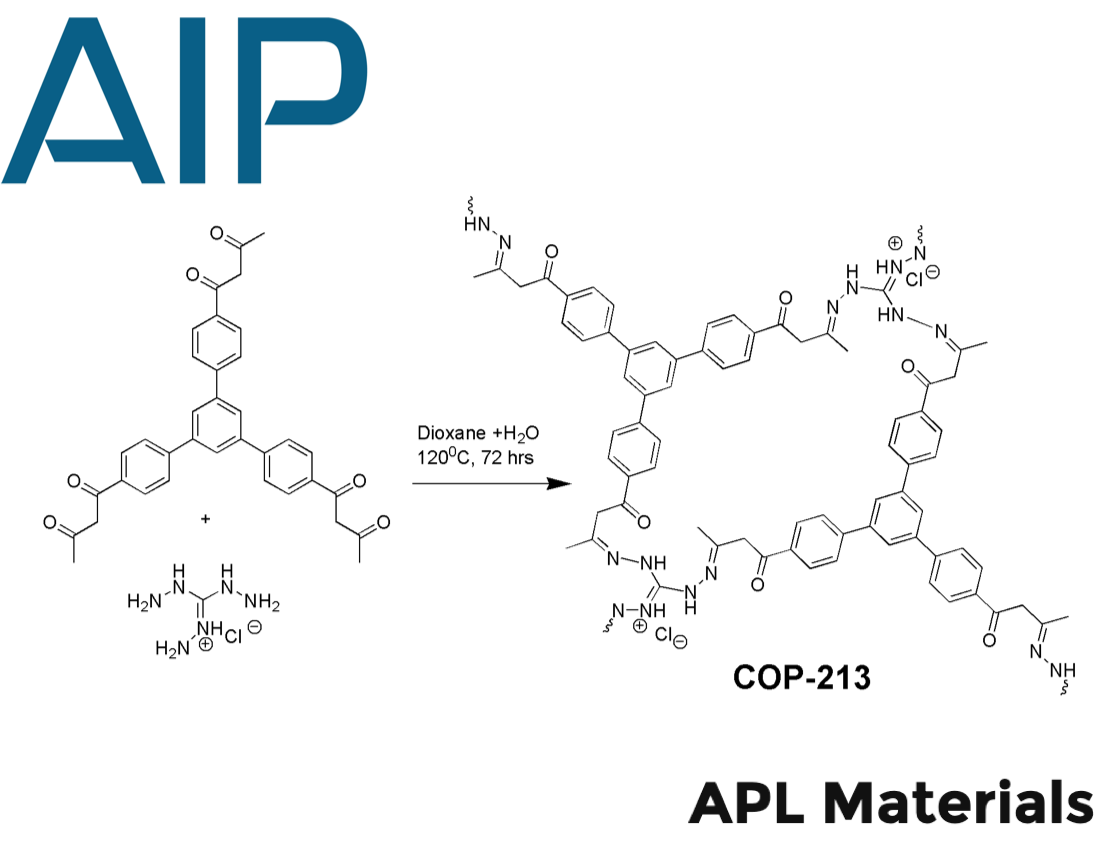
Zwitterion π-conjugated network polymer based on guanidinium and β-ketoenol as a heterogeneous organocatalyst for chemical fixation of CO2 into cyclic carbonates

M. Garai, V. Rozyyev, Z. Ullah, A. Jamal, C. T. Yavuz*
APL Mater., 7, 111102 (2019). Open Access
DOI: 10.1063/1.5122017

The chemical fixation of CO2 with epoxides to cyclic carbonate is an attractive 100% atom economic reaction. It is a safe and green alternative to the route from diols and toxic phosgene. In this manuscript, we present a new zwitterionic π–conjugated catalyst (Covalent Organic Polymer, COP-213) based on guanidinium and β-ketoenol functionality, which is synthesized from triaminoguanidinium halide and β-ketoenols via the ampoule method at 120 °C. The catalyst is characterized by FTIR-attenuated total reflection (ATR), Powder X-Ray diffraction, thermogravimetric analysis, XPS, and for surface area Brunauer–Emmett–Teller and CO2 uptake. It shows quantitative conversion and selectivity in chemical fixation of CO2 to epoxides under ambient conditions and without the need for cocatalysts, metals, solvent, or pressure. The catalyst can be recycled at least three times without the loss of reactivity. 
[Continue reading...]

Fluorinated covalent organic polymers for high performance sulfur cathodes in lithium–sulfur batteries

H. Shin§, D. Kim§, H. J. Kim§, J. Kim, K. Char*, C. T. Yavuz*, J. W. Choi*
Chem. Mater., accepted (2019). §: Equal contribution
DOI: 10.1021/acs.chemmater.9b01986

Lithium–sulfur (Li–S) batteries by far offer higher theoretical energy density than that of the commercial lithium-ion battery counterparts, but suffer predominantly from an irreversible shuttling process involving lithium polysulfides. Here, we report a fluorinated covalent organic polymer (F-COP) as a template for high performance sulfur cathodes in Li–S batteries. The fluorination allowed facile covalent attachment of sulfur to a porous polymer framework via nucleophilic aromatic substitution reaction (SNAr), leading to high sulfur content, e.g., over 70 wt %. The F-COP framework was microporous with 72% of pores within three well-defined pore sizes, viz. 0.58, 1.19, and 1.68 nm, which effectively suppressed polysulfide dissolution via steric and electrostatic hindrance. As a result of the structural features of the F-COP, the resulting sulfur electrode exhibited high electrochemical performance of 1287.7 mAh g–1 at 0.05C, 96.4% initial Columbic efficiency, 70.3% capacity retention after 1000 cycles at 0.5C, and robust operation for a sulfur loading of up to 4.1 mgsulfur cm–2. Our findings suggest the F-COP family with the adaptability of SNAr chemistry and well-defined microporous structures as useful frameworks for highly sustainable sulfur electrodes in Li–S batteries.
[Continue reading...]

Processing nanoporous organic polymers in liquid amines

J. Byun*, D. Thirion, C. T. Yavuz
Beilstein J. Nanotech., 10, 1844–1850 (2019). Open Access 
DOI: 10.3762/bjnano.10.179

Rigid network structures of nanoporous organic polymers provide high porosity, which is beneficial for applications such as gas sorption, gas separation, heterogeneous (photo)catalysis, sensing, and (opto)electronics. However, the network structures are practically insoluble. Thus, the processing of nanoporous polymers into nanoparticles or films remains challenging. Herein, we report that nanoporous polymers made via a Knoevenagel-like condensation can be easily processed into nanoparticles (115.7 ± 40.8 nm) or a flawless film by using liquid amines as a solvent at elevated temperatures. FTIR spectra revealed that the carboxyl groups in the nanoporous polymers act as reactive sites for amines, forming new functionalities and spacing the polymeric chains to be dissolved in the liquid amines. The processed film was found to be CO2-philic despite the low surface area, and further able to be transformed into a fine carbon film by thermal treatment.
[Continue reading...]

Polypyrrole decorated mechanically robust conductive nanocomposites via solution blending and in-situ polymerization techniques

M. Zahra, S. Zulfiqar, C. T. Yavuz, H. S. Kweon, M. I. Sarwar*
Ind. Eng. Chem. Res., 58, 25, 10886-10893 (2019).
DOI: 10.1021/acs.iecr.9b01187

Polypyrrole grafted polystyrene-b-poly(ethylene-ran-butylene)-b-polystyrene (SEBS-g-PPy)/multiwall carbon nanotubes (MWCNTs) conductive nanocomposites were fabricated using two different approaches. The approach of system-I involved primarily the grafting of PPy on SEBS and its subsequent composites with nanotubes. In system-II in situ polymerization/grafting of PPy on SEBS was carried out along with MWCNTs yielding nanomaterials. Presynthesized SEBS-g-PPy and nanocomposites were characterized by Fourier transform infrared spectroscopy, NMR, field emission scanning electron microscopy, transmission electron microscopy, and electrical, mechanical, and thermal properties. The π–π stacking interactions between PPy of SEBS-g-PPy and MWCNTs rendered ample dispersion of the nanotubes in system-II relative to system-I. The electrical conductivity and tensile data showed improvement in these properties of nanocomposites and that system-II nanocomposites can sustain higher stresses, is stiffer, and can absorb more energy before breaking. Thermal stability of both the systems was improved relative to the matrices, and decomposition temperatures were found to increase from 437 to 568 °C. Relative improvement in electrical, thermal and tensile properties were observed for system-II nanocomposites rather than for system-I nanocomposites.
[Continue reading...]

Inversion of dispersion: Colloidal stability of calixarene modified metal-organic framework nanoparticles in non-polar media

U. Jeong, N. A. Dogan, M. Garai, T. S. Nguyen, J. F. Stoddart, C. T. Yavuz* 
J. Am. Chem. Soc., accepted, (2019).
DOI: 10.1021/jacs.9b04198

Making metal-organic frameworks (MOFs) which are stabilized in non-polar media is not as straightforward as their inorganic nanoparticle counterparts, since surfactants penetrate through the porous structures or dissolve the secondary building units (SBUs) through ligand-exchange linker modulator mechanisms. Herein we report that calixarenes stabilize UIO-66 nanoparticles effectively by remaining outside the grains through size exclusion, without pores becoming blocked, all the while providing amphiphilicity that permits the formation of stable colloidal dispersions with much narrower size distributions. Using the UIO-66 dispersed solutions, we showed that smooth films from an otherwise immiscible polystyrene can be made feasibly.
[Continue reading...]

A combined experimental and theoretical study on gas adsorption performance of amine and amide porous polymers

R. Ullah, H. A. Patel, S. Aparicio, C. T. Yavuz*, M. Atilhan*
Micropor. Mesopor. Mater., 279, 61-72 (2019).
DOI: 10.1016/j.micromeso.2018.12.011

In this manuscript, we report synthesis, characterization and application of amine and amide type covalent organic frameworks as CO2 adsorbent materials at various isotherms and wide pressure conditions. Furthermore, we also report a detailed density functional theory investigation of the studied adsorbents in order to explain their adsorption behaviors and provide comparisons with experimental results. The objective of this work was to investigate custom design porous polymers by building amine and amide functionalities in the final structures, whether they have efficient CO2 capturing performances at wide process conditions that covers both low and high pressure end applications to cover either pre- or post-combustion processes. On the other hand, energy storage performances of these materials were tested by performing H2 sorption experiments as well. Two porous polymers, namely COP-9 and COP-10, were characterized with BET, TGA and FTIR to evaluate the physical properties of studied porous polymers and then were tested for CO2, N2 and H2 adsorption both at low and high pressures. Studied materials were found to have compelling adsorption capacity mostly at high pressures and have very good selectivity for CO2/N2 and CO2/H2 respectively.
[Continue reading...]

Applicability of disulfide-polymer particles surface embedded on alginate beads for cadmium removal from airport derived stormwater

D. Ko, H. Kim, H. Lee, C. T. Yavuz, H. R. Andersen, Y. Hwang*
J. Environ. Chem. Eng., 6, 4124–4129 (2018).
DOI: 10.1016/j.jece.2018.06.007

Stormwater runoff derived from airports causes severe cadmium contamination in excess of the maximum limit level and is difficult to treat due to the irregular contamination levels from scattered rainfall. To overcome this and remove cadmium from runoff, a new reactive filtration column is introduced. Sulfur functionalized polymer particles were successfully embedded onto the surface of alginate bead (DiS-algi) and simulated a real stormwater treatment filtration column. The DiS-algi shows 22.3 mg/g of batch and 877 μg/g of continuous flow sorption capacity. Also, the results for the new sorption material show that within 6 mins half of the cadmium was removed with 31 L/mg of Langmuir sorption affinity, outperforming an activated carbon filter. From a breakthrough test the reactive column shows complete uptake of cadmium from a contaminated flow, lasting two hours until reaching the breakthrough point. Furthermore, regeneration tests of the column verified its reusability. DiS-algi appears to be a viable new cadmium sorption material for airport derived stormwater runoff filtration systems.
[Continue reading...]

Highly efficient catalytic cyclic carbonate formation by pyridyl salicylimines

S. Subramanian, J. Park, J. Byun, Y. Jung, C. T. Yavuz*
ACS Appl. Mater. Interfaces, accepted.
DOI: 10.1021/acsami.8b00485

Cyclic carbonates as industrial commodities offer a viable non-redox carbon dioxide fixation, and suitable heterogeneous catalysts are vital for their widespread implementation. Here we report a highly efficient heterogeneous catalyst for CO2 addition to epoxides based on a newly identified active catalytic pocket consisting of pyridine, imine and phenol moieties. The polymeric, metal-free catalyst derived from this active site converts less reactive styrene oxide under atmospheric pressure in quantitative yield and selectivity to the corresponding carbonate. The catalyst doesn’t need additives, solvents, metals or co-catalysts, can be reused at least 10 cycles without loss of activity, and scaled up easily to a kg scale. DFT calculations reveal that the nucleophilicity of pyridine base gets stronger due to the conjugated imines and H-bonding from phenol accelerates the reaction forward by stabilizing the intermediate.

Link to the journal page
[Continue reading...]

Granular activated carbon with grafted nanoporous polymer enhances nanoscale zero-valent iron impregnation and water contaminant removal

P. D. Mines, B. Uthuppu, D. Thirion, M. H. Jakobsen, C. T. Yavuz, H. R. Andersen, Y. Hwang*
Chem. Eng. J., 339, 22-31 (2018).
DOI: 10.1016/j.cej.2018.01.102

Granular activated carbon was customized with a chemical grafting procedure of a nanoporous polymeric network for the purpose of nanoscale zero-valent iron impregnation and subsequent water contaminant remediation. Characterization of the prepared composite material revealed that not only was the polymer attachment and iron impregnation successful, but also that the polymeric shell acted as a protective barrier against the effects of oxidation from the surrounding environment, nearly 99% of total iron content was in the form of zero-valent iron. When applied towards the remediation of two common water contaminants, nitrobenzene and nitrate, the composite material exploited the qualities of both the activated carbon and the polymeric network to work together in a synergistic manner. In that the increased protection from oxidation allowed for increased reactivity of the nanoscale zero-valent iron, and that the adsorption abilities of both the carbon and the polymer achieved a higher amount of total removal of the contaminants.
[Continue reading...]

Influence of interlayer functionalization of kaolinite on property profile of copolymer nanocomposites

S. Zulfiqar*, M. I. Sarwar*, N. Rasheed, C. T. Yavuz
Appl. Clay Sci., 112–113, 25–31, (2015). DOI: 10.1016/j.clay.2015.04.010.


Nanocomposites of co-poly (vinyl chloride–polyvinyl acetate–polyvinyl alcohol) (PVC–PVAc–PVA) and kaolinite were prepared via solution intercalation technique. To improve compatibility among the phases and to expand the interlayer basal spacing, kaolinite was modified using dimethylsulfoxide (DMSO) as a swelling agent. The influence of kaolinite dispersion and interaction between the disparate phases on the properties of nanocomposites were investigated using Fourier transform infrared spectrometer (FTIR), X-ray diffraction (XRD), scanning electron microscopy (SEM), transmission electron microscopy (TEM), mechanical testing, thermogravimetric analysis (TGA) and water absorption measurements. IR data confirmed the hydrogen bonds formed between DMSO and the surface hydroxyl groups of kaolinite. XRD and microscopic results revealed that clay mineral was intercalated with uniform dispersion at nanoscale in the matrix. Tensile testing of these materials indicated significant improvements in the mechanical properties relative to the pure copolymer. Incorporation of kaolinite into the organic phase enhanced the thermal stability of the nanocomposites. Water absorption of the nanomaterials was reduced upon the addition of modified kaolinite rendering decreased permeability with increasing dispersibility of clay mineral in the copolymer matrix.
[Continue reading...]

Nanostructure and mechanical properties of aromatic polyamide and reactive organoclay nanocomposites

M. U. Alvi, S. Zulfiqar, C. T. Yavuz, H.S. Kweon, M. I. Sarwar*
Mater. Chem. Phys., 147, 636-643, (2014). [DOI]


Aromatic polyamide/organoclay nanocomposites were synthesized using the solution blending technique. Treatment of montmorillonite clay with p-phenylenediamine produced reactive organophilic clay for good compatibility with the matrix. Polyamide chains were prepared by condensing a mixture of 1,4-phenylenediamine and 4-4′-oxydianiline with isophthaloyl chloride under anhydrous conditions. These chains were end capped with carbonyl chloride using 1% extra acid chloride near the end of reaction to develop the interactions with organoclay. The dispersion and structure–property relationship were monitored using FTIR, XRD, FE-SEM, TEM, DSC and tensile testing of the thin films. The structural investigations confirmed the formation of delaminated and disordered intercalated morphology with nanoclay loadings. This morphology of the nanocomposites resulted in their enhanced mechanical properties. The tensile behavior and glass transition temperature significantly augmented with increasing organoclay content showing a greater interaction between the two disparate phases.
[Continue reading...]

Conductive nanocomposite materials derived from SEBS-g-PPy and surface modified clay

M. Zahra, S. Zulfiqar, C. T. Yavuz, H.S. Kweon, M. I. Sarwar*
Compos. Sci. Technol., 100, 44–52, (2014). [DOI]


Conductive nanocomposites were synthesized from surface modified clay and polypyrrole grafted triblock copolymer, polystyrene-b-poly(ethylene-co-butylene)-b-polystyrene (SEBS-g-PPy). The grafting of PPy was carried out on SEBS using FeCl3 as an oxidant and the formation of subsequent materials was monitored by IR, 1H NMR spectroscopy and Gel permeation chromatography (GPC). Surface treatment of the clay was carried out by ion exchange method using the cationic salt of 2,2-bis[4-(4-aminophenoxy)phenyl]propane for better adhesion with the polymer matrix. Thin composite films containing 1–8-wt.% organoclay were investigated by FTIR, XRD, TEM, tensile testing, TGA, DSC and electrical conductivity measurements. The molar mass as determined by GPC was around 37,000. XRD pattern and TEM images described good dispersion of clay platelets in the nanocomposites. Tensile testing revealed improvement in mechanical properties up to 3-wt.% of organoclay. The bulk electrical conductivity was increased up to 7-wt.% with increase in resonance of delocalized electrons of stretched PPy chains due to hydrogen bonding with organoclay in the nanocomposites. Thermal decomposition temperatures of the nanocomposites were in the range 435–448 °C. The decomposition of the nanocomposites was observed at higher temperatures relative to the pure polymer matrix with increasing clay loading. The weight retained after 900 °C was approximately equal to the amount of organoclay added in the composites. These composite materials exhibited improvement in glass transition temperature as compared to SEBS-g-PPy.


[Continue reading...]

Amidoxime Porous Polymers for CO2 Capture

S. Zulfiqar, S. Awan, F. Karadas, M. Atilhan*, C. T. Yavuz*, M. I. Sarwar*
RSC Adv.,  3 (38), 17203 - 17213, (2013). [DOI] [pdf] [WOS]


[Continue reading...]

Influence of aminosilane coupling agent on aromatic polyamide/intercalated clay nanocomposites

M. U. Alvi, S. Zulfiqar*, C. T. Yavuz, H.-S. Kweon, M. I. Sarwar*
Ind. Eng. Chem. Res., 52 (21), 6908–6915, (2013). [DOI] [pdf] [WOS]


Aminosilane grafted and 1,4-phenylene diamine modified reactive montmorillonite was exploited for the generation of aromatic polyamide-layered silicate nanocomposites. For better compatibility between the two disparate phases, the hydrophilic nature of montmorillonite was changed into organophilic by ion-exchange method using 1,4-phenylenediamine as an intercalating agent and the hydroxyl groups present on clay surface and edges were used to graft 3-aminopropyltriethoxysilane (APTS) on clay platelets. The dispersion behavior of reactive organoclay was monitored in the polyamide matrix prepared from a pair of diamines (1,4-phenylenediamine and 4-4′-oxydianiline) with isophthaloyl chloride under anhydrous conditions. The resulting chains were selectively converted into carbonyl chloride ends to interact exclusively with free amine groups of the 1,4-phenylenediamine and APTS grafted on nanoclay. Thin composite films containing 2 to 10-wt. % clay were probed for FTIR, XRD, SEM, TEM, tensile testing, TGA and DSC measurements. XRD and TEM results described ample dispersion and morphology of clay sheets in the nanocomposites. Mechanical measurements revealed that tensile strength increased 110 %, elongation 172 % while modulus and toughness augmented many folds upon the addition of 4-6 wt. % clay in the matrix. Thermal decomposition temperatures of the nanocomposites were in the range 425-480 oC. The glass transition temperature increased up to 142.4 oC with 6-wt. % addition of organoclay in the matrix relative to pure polyamide depicting interfacial interactions among the phases.
[Continue reading...]

Investigation on novel thermoplastic poly(urethane-thiourea-imide)s with enhanced chemical and heat resistance

A. Kausar, S. Zulfiqar, C. T. Yavuz, M. I. Sarwar*
Polym. Degrad. Stabil., 96 (7), 1333-1341 (2011). [DOI] [pdf]


A new generation of segmented thermoplastic poly(urethane-thiourea-imide)s (PUTIs) was synthesized via reaction of polyethylene glycol and thiourea-based prepolymer with dianhydride as chain extenders. NCO-terminated prepolymer was synthesized from a new diisocyanate, 3-(3-((4-isocyanatophenyl)carbamoyl)thioureido)phenyl-4-isocyanatophenylcarbamate (IPCT), as a hard segment and PEG forming soft segment. The starting materials and polymers were characterized by conventional methods and physical properties such as solubility, solution viscosity, molecular weight, thermal stability and thermal behavior were studied. PUTIs showed partially crystalline structures. Weight average molecular weights of PUTIs (GPC measurements) were in the range of 1,68,694-1,97,035. Moreover, thermogravimetric analysis indicated that poly(urethane-thiourea-imide)s were fairly stable above 500 oC having T10 of 521-543 oC. Investigation of the results authenticated the approach of introducing thiourea (using IPCT) and imide structure in polyurethanes for the improvement of thermal stability. In comparison to typical polyurethanes, these polymers exhibited better heat resistance, chemical resistance as well as processability.

[Continue reading...]
 
Copyright © . ONE Lab - Prof. Cafer T. Yavuz - Posts · Comments
Theme Template by BTDesigner · Powered by Blogger